《保险研究》20250906-《机关事业单位养老保险改革与家庭发展韧性——基于增量改革和不确定性视角的分析》(李锐、刘青华)
[中图分类号]F062.6[文献标识码]A[文章编号]1004-3306(2025)09-0082-18 DOI:10.13497/j.cnki.is.2025.09.006
资源价格:30积分
- 内容介绍
[摘 要]机关事业单位养老保险改革立足增量改革并设置了十年的保低限高过渡期,过渡期前后不同时期退休人员具有不同的保障水平、预期以及不确定性。2025年正值保低限高过渡结束时期,本文从增量改革和不确定性视角,利用2012~2022年中国家庭追踪调查数据,使用双重差分法和三重差分法研究了机关事业单位养老保险改革对家庭发展韧性的影响。研究发现,改革总体上显著提高了其家庭发展韧性。根据退休时间分组后发现,改革增加了过渡期前退休人员的养老金收入和过渡期内退休人员的工资收入,进而提高了其家庭发展韧性;但对于过渡期后退休人员,改革在增加工资收入的同时也提高了其面临的不确定性,且不确定性给家庭发展韧性带来的不利影响大于工资收入的积极影响,最终导致改革降低了其家庭发展韧性。进一步分析表明,改革带来的不确定性主要降低了西部和中部地区过渡期后退休人员的家庭发展韧性,收入、受教育程度和健康状况的改善均可以显著缓解不确定性产生的不利影响。本研究表明制度设计在考虑福利待遇时也需关注不确定性的变化,为深化完善养老保险制度改革、防范化解风险和推动经济持续回升向好提供了政策启示。
[关键词]机关事业单位;养老保险改革;家庭发展韧性;不确定性
[基金项目]本文得到国家社会科学基金后期资助项目“中国养老保险制度中的退休激励问题研究”(21FGLB073)的资助。
[作者简介]李锐,中南财经政法大学公共管理学院教授;刘青华(通讯作者),中南财经政法大学公共管理学院博士研究生。
The Reform of Pension Insurance for Government Agencies and Public Institutions and Household Development Resilience:An Analysis from the Perspective of Incremental Reform and Uncertainty
LI Rui,LIU Qing-hua
Abstract:The pension reform for government agencies and public institutions is incremental and has established a ten-year transition period with a floor and ceiling on benefits.Retirees before and after the transition period face differences in the level of protection,expectations,and uncertainties.The year 2025 marks the end of the transition period with a floor and ceiling policy.This study examines the impact of pension reform for government agencies and public institutions on household resilience from the perspectives of incremental reform and uncertainty.Using data from the China Family Panel Studies (CFPS) from 2012 to 2022,the research applies both difference-in-differences (DID) and triple difference-in-differences (DDD) methods to analyze the effects of the reform.The results show that the reform significantly improves household development resilience overall.After grouping by retirement timing,it is found that the reform increases pension income for those retiring before the transition period and wage income for those retiring during the transition period,thereby improving their household development resilience.For retirees after the transition period,however,the reform increases wage income while also raising the uncertainty.The adverse impact of this uncertainty on household development resilience is greater than the positive effects of wage income,ultimately leading to a decrease in the development resilience of households with retirees after the transition period.Further analysis indicates that the uncertainty brought about by the reform primarily reduces the household development resilience of retirees in the western and central regions after the transition period.Improvements in income,education levels,and health status can all significantly mitigate the adverse effects generated by this uncertainty.This study demonstrates that policy design should not only consider welfare benefits but also pay attention to changes in uncertainty.These findings offer policy insights for deepening and improving the reform of the pension insurance system,preventing and resolving risks,and consolidating the positive economic momentum.
Key words:government agencies and public institutions;pension insurance reform;household development resilience;uncertainty
《保险研究》20250901-《老年家庭消费储蓄行为研究新进展》(易行健、李青塬、吴卫星、杨碧云)
《保险研究》20250902-《基于机器学习方法的即时冲击事件影响国家风险研究》(王稳、周娅乐)
《保险研究》20250903-《锚定期货的玉米收入保险产品优化设计》(李正强、余方平)
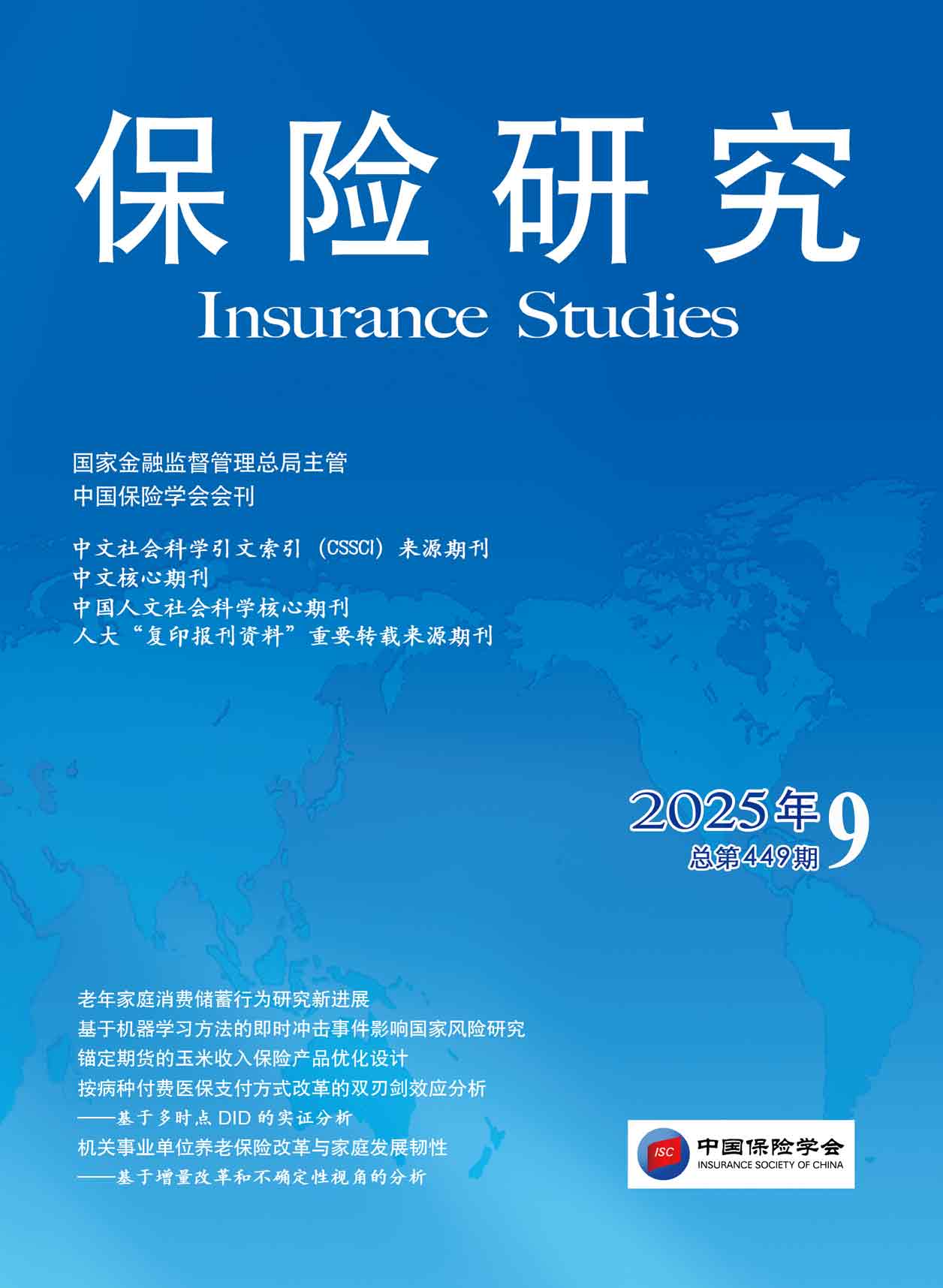
《保险研究》20250904-《长期护理保险对老年人政府养老责任认知的影响——基于四期CLASS数据的分析》(马琦峰、宁晶、陈鹤)
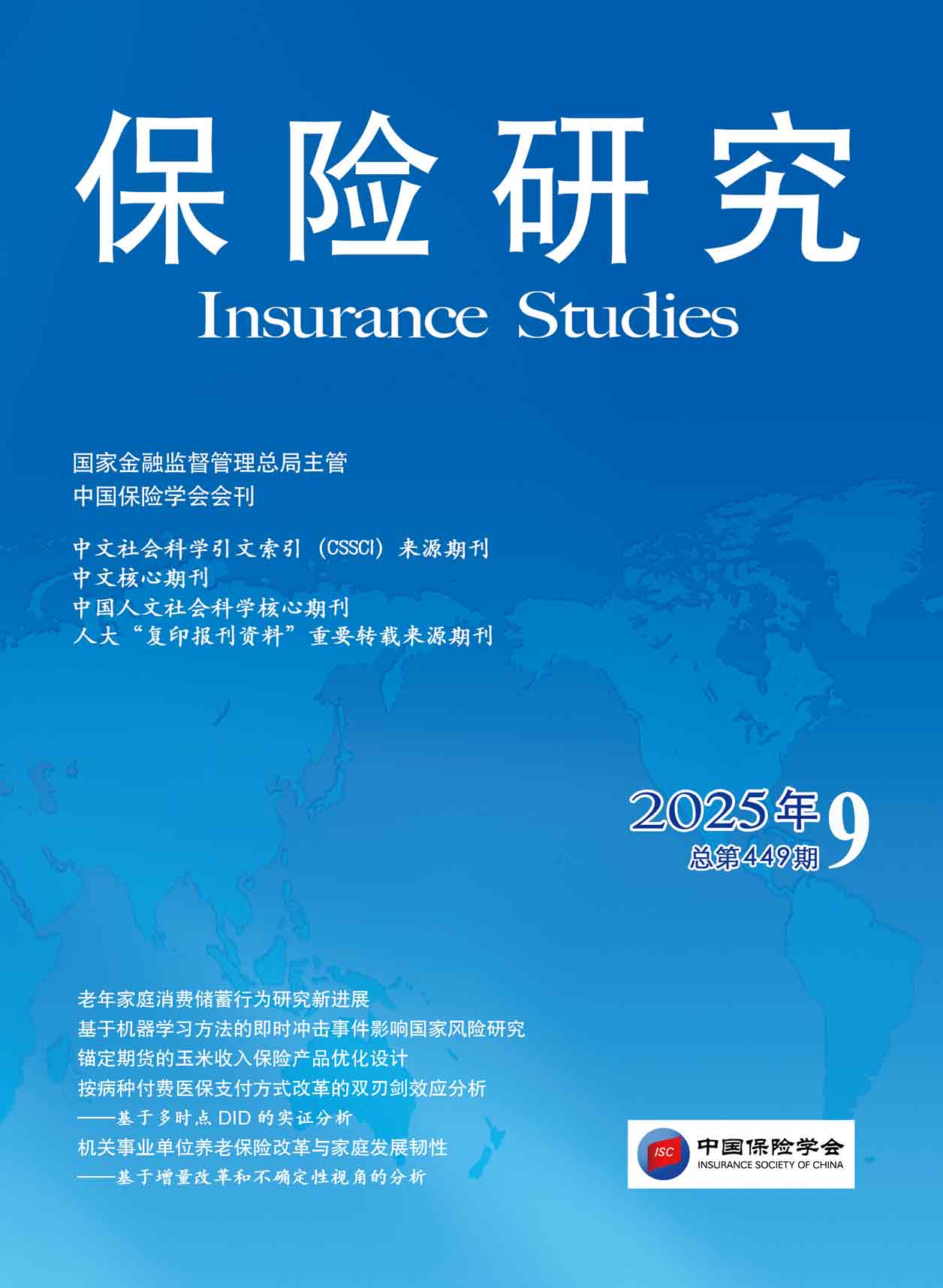
《保险研究》20250905-《按病种付费医保支付方式改革的双刃剑效应分析——基于多时点DID的实证分析》(朱晓佳、于淼)
-
《保险研究》20250906-《机关事业单位养老保险改革与家庭发展韧性——基于增量改革和不确定性视角的分析》(李锐、刘青华)