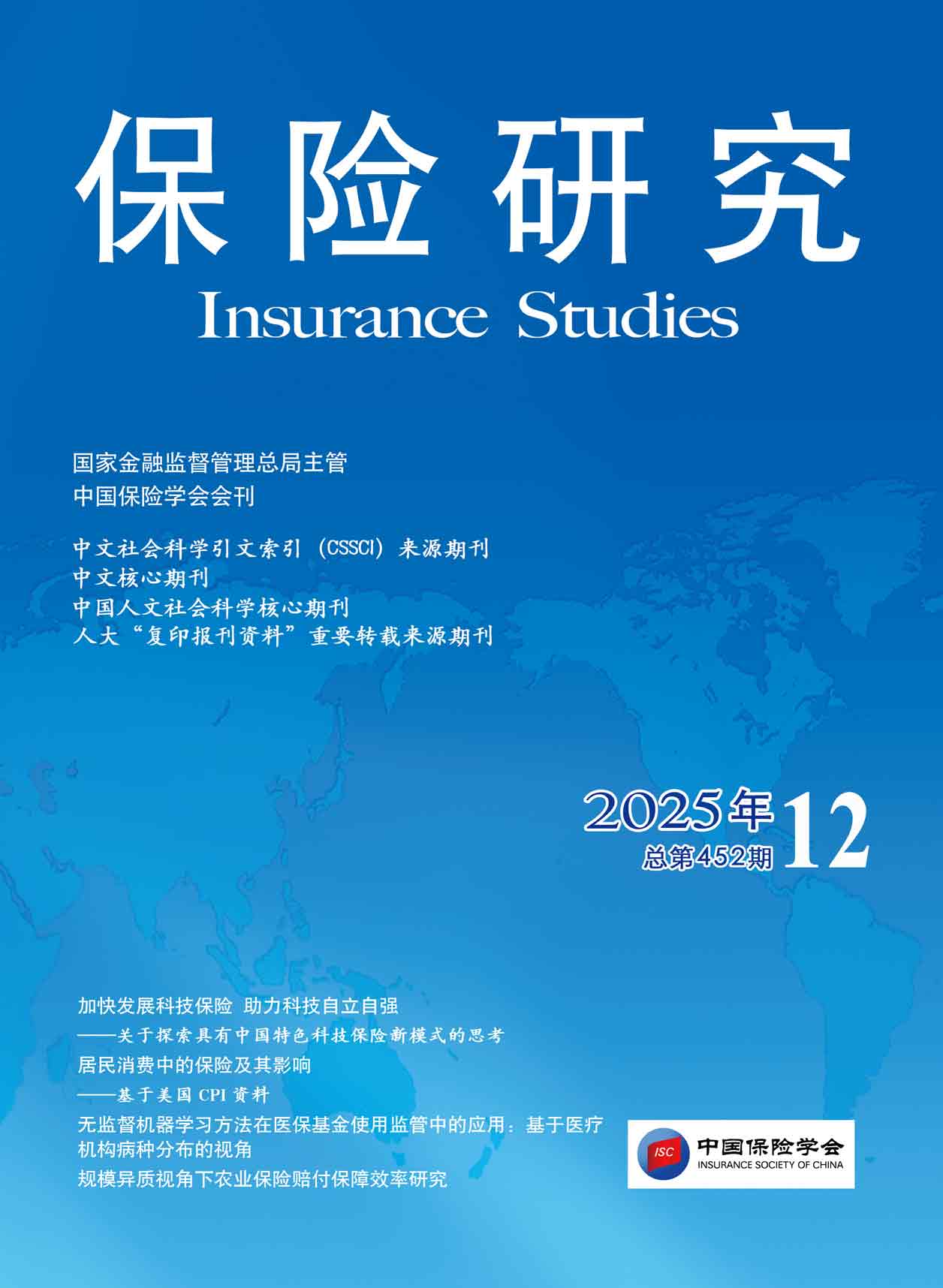
《保险研究》20251204-《无监督机器学习方法在医保基金使用监管中的应用:基于医疗机构病种分布的视角》(蒋舒、洪念洋、单博闻、封进)
[中图分类号]F840.684[文献标识码]A[文章编号]1004-3306(2025)12-0041-12 DOI:10.13497/j.cnki.is.2025.12.004
资源价格:30积分
- 内容介绍
[摘 要]在医保支付方式改革与常态化基金监管背景下,本文提出一种面向“医疗机构—病种分布”的无监督学习框架,以识别具有潜在违规风险医疗机构并缩小事后核查范围。基于某地区2023年职工医保住院数据,构建“医院—病种频次”矩阵,使用四种无监督方法分别计算机构异常分数,对各机构异常值进行总体排名。为提升可解释性,还提出了识别对异常机构贡献较大的异常病种的方法。研究表明,基于病种分布的无监督检测可在缺乏标签与规则库不完备的情形下,生成具有解释性的“可疑清单”,为飞行检查与事后稽核提供聚焦线索,提高监管资源配置效率。该方法未来可与费用明细及DRG/DIP路径数据联动,并纳入纵向病史与人群分层,以进一步提升识别效能与政策可落地性。
[关键词]无监督学习;医保基金监管;DRG/DIP改革;医院行为
[基金项目]感谢国家自然科学基金项目对本研究的资助(72334002;72473030)。
[作者简介]蒋舒,复旦大学保险应用创新研究院副研究员;洪念洋,复旦大学智能复杂体系基础理论与关键技术实验室硕士研究生;单博闻,复旦大学经济学院博士研究生;封进(通讯作者),复旦大学经济学院教授。
The Application of Unsupervised Machine Learning Methods in the Supervision of Medical Insurance Funds:A Perspective Based on the Distribution of Disease Types in Medical Institutions
JIANG Shu,HONG Nian-yang,SHAN Bo-wen,FENG Jin
Abstract:In the context of medical insurance payment reform and fund supervision,this paper proposes an unsupervised learning framework focused on the “hospital-disease distribution” dimension,aiming to identify hospitals with potential risks and narrow down the scope of post-event verification.Based on inpatient data from the employee medical insurance program of a certain region in 2023,we construct a “hospital-disease frequency” matrix and apply four unsupervised methods to calculate anomaly scores for each hospital,followed by an overall ranking of hospital anomalies.To enhance interpretability,we also propose a method to identify disease types that contribute significantly to the anomalies of suspicious hospitals.The study shows that unsupervised detection based on disease distribution can generate interpretable “suspicious lists” even in the absence of labeled data or a comprehensive rule base,thereby providing focused leads for surprise inspections and post-event audits,and improving the efficiency of regulatory resource allocation.In the future,this method could be integrated with detailed expense records and DRG/DIP pathway data,and further enhanced by incorporating longitudinal medical history and population stratification,so as to boost both detection effectiveness and policy implementability.
Key words:unsupervised learning;social medical insurance fund supervision;DRG/DIP reform;hospital behaviors
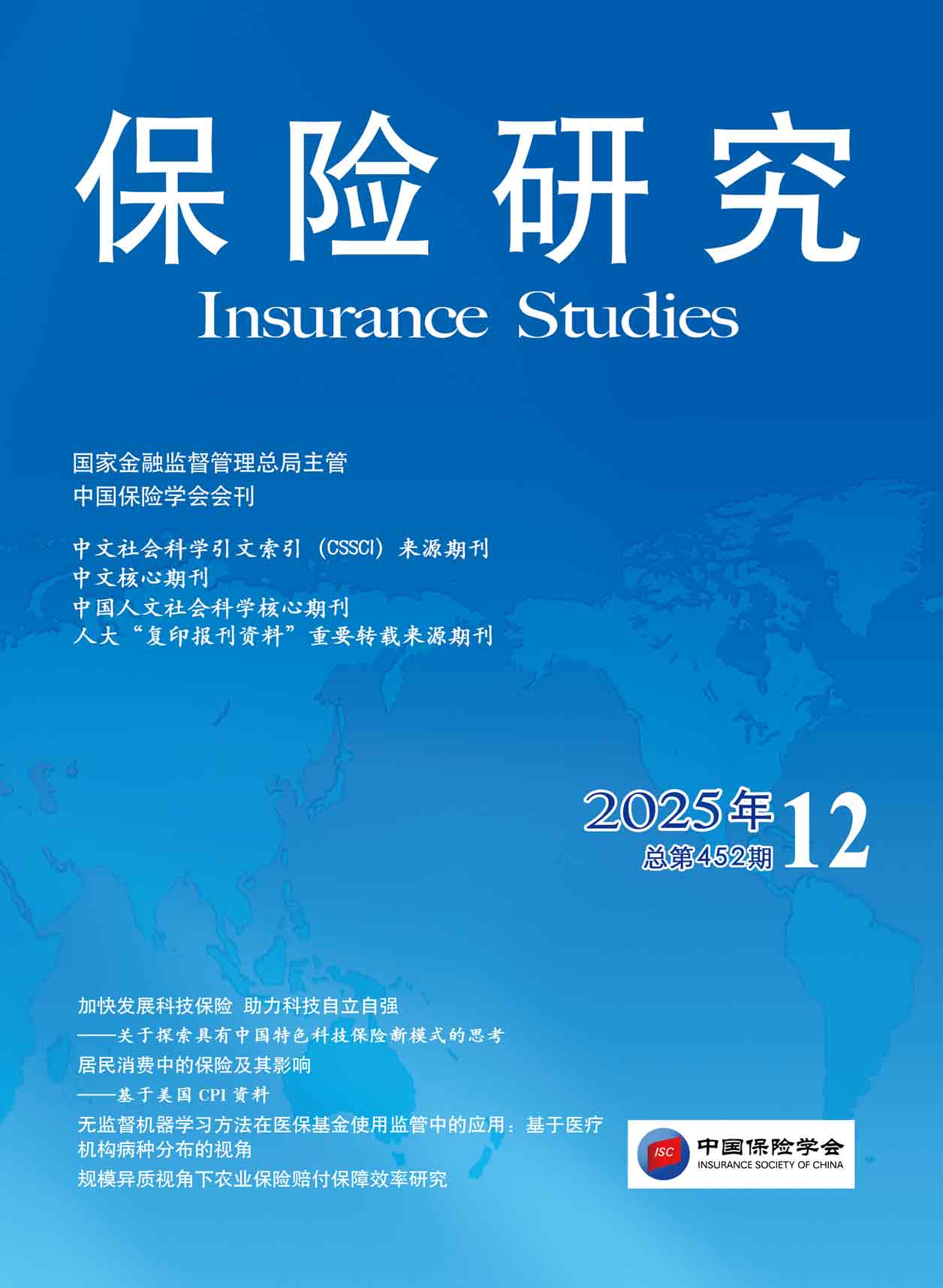
《保险研究》20251201-《加快发展科技保险 助力科技自立自强——关于探索具有中国特色科技保险新模式的思考》(向东)
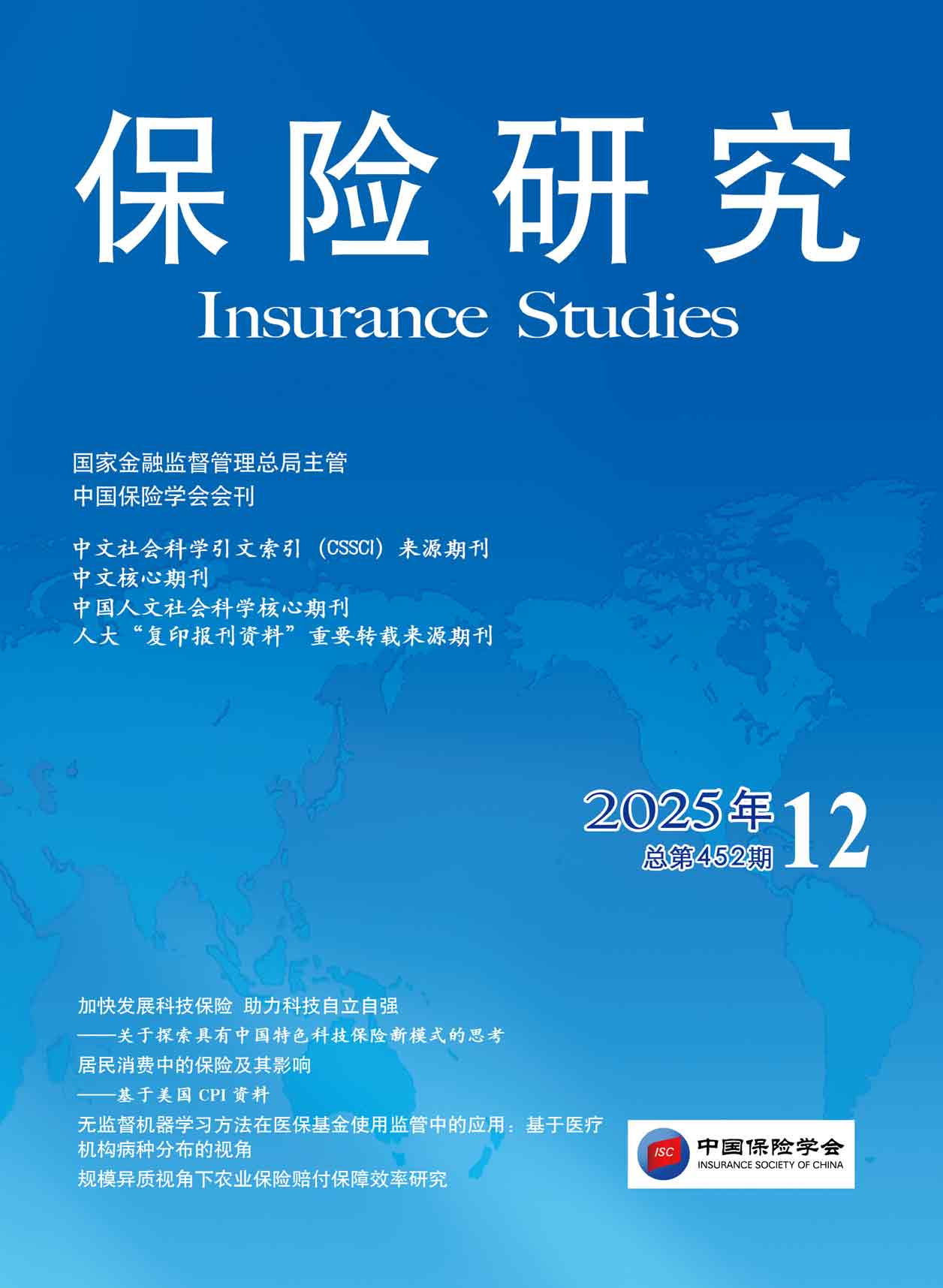
《保险研究》20251202-《居民消费中的保险及其影响——基于美国CPI资料》(王向楠)
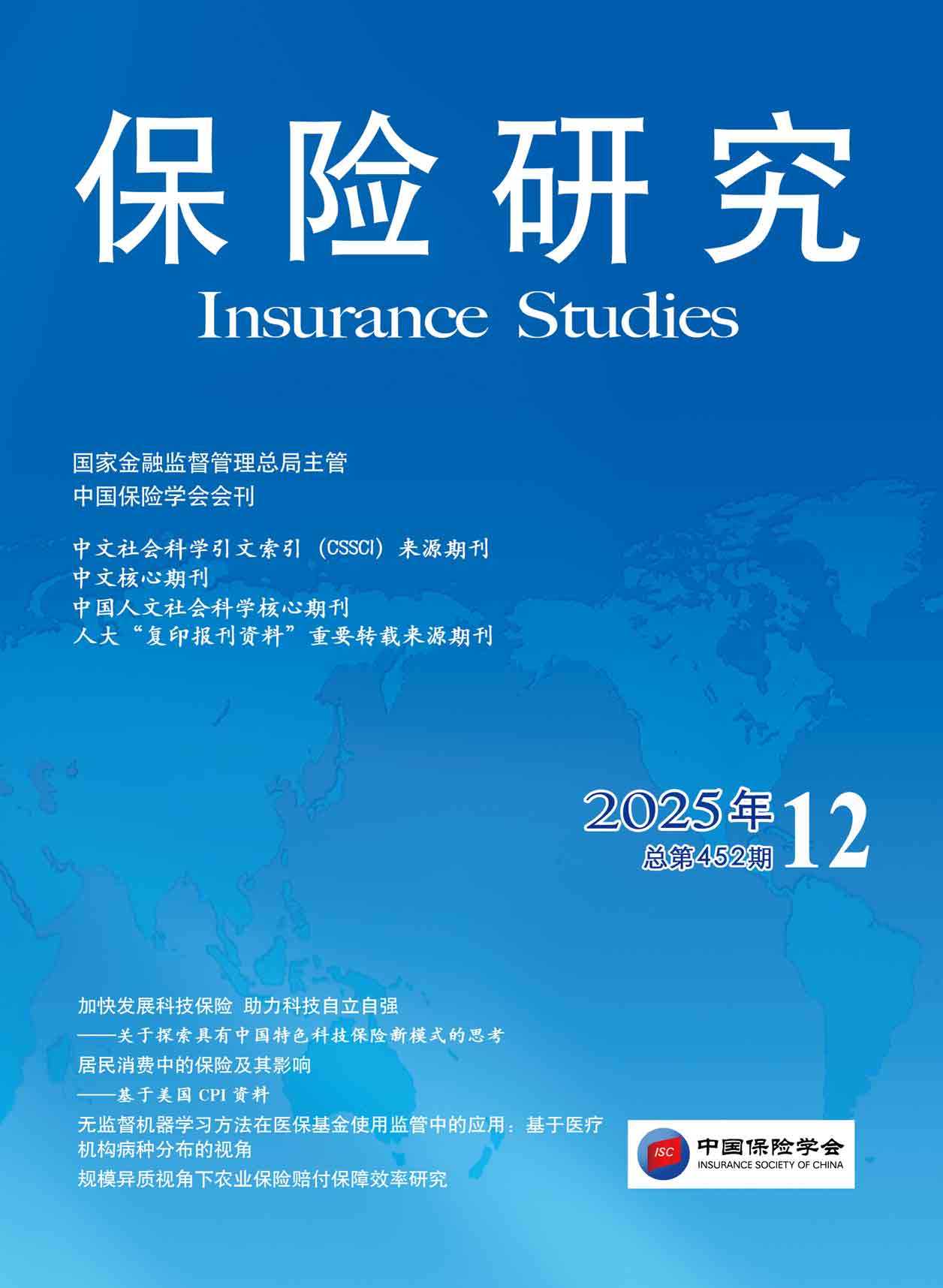
《保险研究》20251203-《激励相容原理下补充医疗保险最优决策研究——以惠民保为例》(马冰、贺如意、王吉元、周桦)
-
《保险研究》20251204-《无监督机器学习方法在医保基金使用监管中的应用:基于医疗机构病种分布的视角》(蒋舒、洪念洋、单博闻、封进)
《保险研究》20251205-《中国老年人口无失能预期寿命演变及其分解研究》(汤薇、粟芳)
《保险研究》20251206-《机构投资者抱团加剧了高管机会主义减持吗?》(张家轩、李化龙)